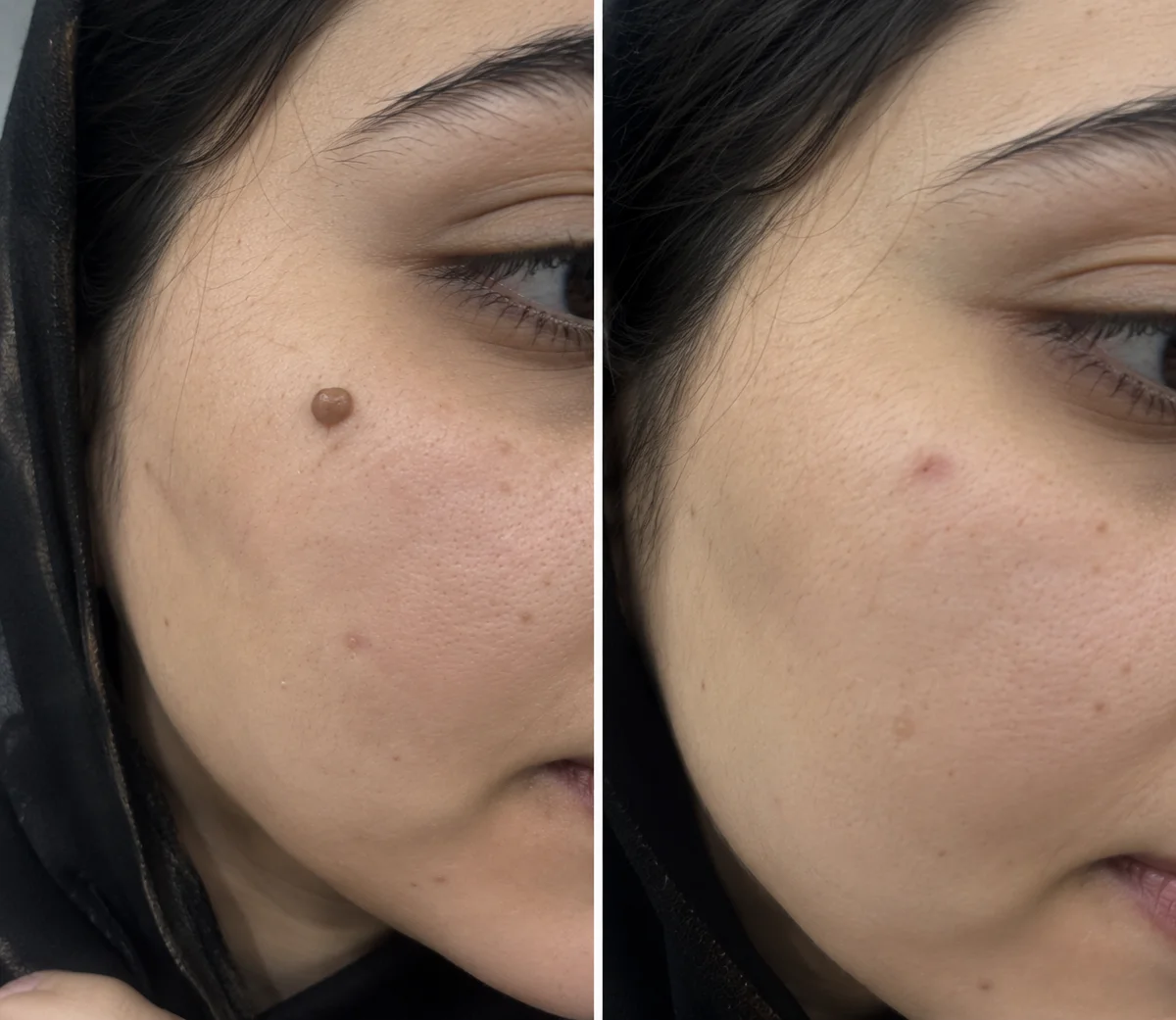
Skin tags on the neck, small warts on the hands, dark raised spots on the cheeks: these are some of the most common reasons people see a dermatologist, and most can be removed in one quick visit with cauterization.
What Is Cauterization?
Cauterization is the controlled removal of small, harmless growths on the surface of the skin. There are two methods, and the dermatologist chooses based on the growth, where it is and your skin tone.
| Electrocautery (electro-cauterization) | Chemical cauterization | |
|---|---|---|
| How it works | A fine probe uses a controlled electrical current to remove the growth with heat | A chemical agent, such as high-strength TCA, destroys the growth |
| Best for | Skin tags, DPN, syringoma, warts, small sebaceous growths | Smaller, flatter growths, warts, areas where electrical equipment is less suitable |
| Not for | People with pacemakers | — |
What It Treats
- Skin tags: soft, hanging growths on the neck, underarms, eyelids or body
- DPN (dermatosis papulosa nigra): small, flat, dark bumps on the cheeks and around the eyes, very common in South Asian skin
- Warts: common, plane (flat) and around the nails
- Syringoma: small, skin-coloured bumps, usually under the eyes
- Milia: tiny white cysts
- Sebaceous hyperplasia and other small benign growths
Moles need a check first. Only moles a dermatologist has examined and confirmed harmless are removed this way. A mole that has changed, itches or bleeds should always be examined, and may need a biopsy instead.
The Procedure
- Assessment. The dermatologist examines each growth, confirms it is harmless and chooses the method.
- Numbing. A local anaesthetic cream or injection numbs the area.
- Removal. Each growth is treated individually. This takes 15–45 minutes depending on how many you have.
- Aftercare. You get instructions and an ointment, and go home the same day.
Healing, Day by Day
| When | What to expect |
|---|---|
| Same day | Small, slightly raw spots; mild redness |
| Days 1–2 | Keep clean and dry |
| Days 2–5 | Small scabs form over each spot |
| Days 5–10 | Scabs fall off on their own, leaving pink new skin |
| Weeks after | Pink or slightly dark marks gradually fade |
Aftercare
- Keep the area clean and dry for the first 24–48 hours
- Apply the prescribed ointment
- Do not pick or scratch the scabs. This is the main cause of marks and scarring
- Use sunscreen on the area once it has healed, to prevent darkening
Scarring and Darkening
With correct technique and aftercare, scarring is minimal. In darker skin, treated spots can turn temporarily darker. This is called post-inflammatory hyperpigmentation (PIH). It fades with sunscreen, and if needed, peels or Q-Switch laser can speed it up. Tell your doctor if you form keloid or raised scars, as that changes the plan.
Warts That Keep Coming Back
Warts are caused by a virus. If you have many warts, or they keep returning, wart immunotherapy (MMR injections, 3–5 sessions, 2–4 weeks apart) helps your immune system clear them, instead of removing them one by one.
Before Your Appointment
- Do not try to remove or irritate the growths beforehand
- Tell the doctor about blood thinners
- Mention any history of keloids or raised scars
- Tell the doctor if you have a pacemaker
Removal in Srinagar
At Ixora in Chanapora, Srinagar, every growth is assessed by Dr. Suhail Rather, MD Dermatology, before it is removed. Most patients are treated in a single visit. See cauterization at Ixora, or book a consultation.